






An interview with Svar Complement Excellence Award recipient 2024
Elena Goicoechea de Jorge has made significant strides in understanding the complement system, particularly in relation to Atypical Hemolytic Uremic Syndrome (aHUS) and C3 Glomerulopathy (C3G).
Svar had the pleasure to catch up with Dr. Goicoechea de Jorge at the European Meeting on Complement in Human Diseases (EMCHD) held in Lübeck, Germany, where she received the Svar Complement Excellence Award. This award acknowledges remarkable international contributions made by researchers and physicians in the complement field.
Dr. Goicoechea de Jorge’s research journey began during her doctoral studies, where she identified numerous complement gene variants associated with aHUS and developed the first animal model for the disease. “These findings contributed to the understanding of the pathogenic mechanisms leading to aHUS,” she explains.
In her postdoctoral work, she demonstrated that C5 activation is an absolute requirement for the development of the disease, further solidifying her expertise in the field. Currently, her research focuses on two main areas: the pathophysiology of the factor H protein family and the role of complement in ANCA-associated vasculitis (AAV).
Therapeutic Targets in Complement Research
When the complement system is activated through one of its three pathways (classical, lectin, or alternative), it induces inflammation and cell damage. Unlike the classical and lectin pathways that need to be triggered through stimuli, the alternative pathway (AP) is always ready to act, requiring strict regulation to prevent uncontrolled activation. Factor H (FH) is the main regulator of the AP, both in circulation and on cell surfaces. However, FH-related proteins (FHRs) can counteract FH’s regulatory activity. While FH inactivates surface-bound C3b to prevent further activation, FHRs promote complement activation through the AP.
“This kind of therapy, where you prevent the overactivation of the alternative pathway, is very attractive...”
Dr. Goicoechea de Jorge and colleagues have suggested that FHR1 could serve as a therapeutic target for conditions like C3G and AAV. She envisions a therapy that modulates the complement system rather than blocking it entirely. “This kind of therapy, where you prevent the overactivation of the alternative pathway, is very attractive,” she notes. Such an approach could be particularly beneficial for chronic conditions where complete inhibition of the complement system is not necessary.
When asked about the potential for gene therapy, she acknowledges that while it could be a viable approach, there are still many unknowns regarding the specific roles of complement proteins. “There is still a lot of work to do to figure out exactly what they’re doing,” she states, emphasizing the complexity of the complement system.
Current Research Focus
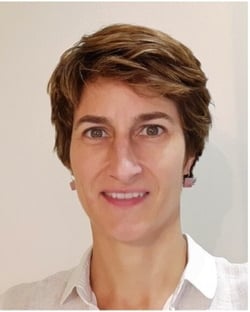 Currently, Dr. Goicoechea de Jorge is concentrating on AAV, aiming to understand the mechanisms behind complement dysregulation in this context. “There are still a lot of open questions,” she admits, highlighting the need for further investigation into genetic variants that influence disease susceptibility and severity. Her recent publications have identified polymorphisms related to the factor H family of proteins, which are crucial for understanding the pathogenesis of the disease.
She is also developing animal models to explore the intricate interactions between complement proteins and immune cells, particularly neutrophils, which play a key role in AAV. “How complement dysregulation contributes to the pathogenesis of the disease is still largely unknown,” she asserts, indicating the ongoing challenges in her field.
Challenges & Future Directions
Dr. Goicoechea de Jorge acknowledges the challenges of translating genetic associations into biological understanding. “Going from the genetic association to the biology behind this genetic observation is a long way,” she explains. Her multidisciplinary approach combines genetics, proteomics, and functional investigations to piece together the complex puzzle of complement-mediated diseases.
“Dissecting the specific mechanisms should tell you the ideal target to treat the patients”
In her view, one of the most exciting aspects of her research is analysing the specific mechanisms that lead to complement-mediated conditions. “Dissecting the specific mechanisms should tell you the ideal target to treat the patients,” she emphasizes. As more patients are treated with complement inhibitors, understanding their effects on complement biology will be crucial for future therapeutic developments.
The Promise of AI in Genetic Research: A New Frontier
Looking forward, Dr. Goicoechea de Jorge believes that integrating AI is crucial and sees it as the future of the field. This summer, she has been contemplating this direction, realizing the potential of AI to handle the vast amounts of data she works with and has collected.
Dr. Goicoechea de Jorge collaborates with Santiago Rodríguez de Córdoba, her former PhD supervisor, and together they have built extensive registries on conditions like aHUS, C3G, and AAV. They are generating a significant amount of genetic, and other types of data, such as complement profiles in plasma and urine.
Handling this data is challenging without powerful systems. Dr. Goicoechea de Jorge feels it’s time to implement AI to make sense of it all. She acknowledges that researchers often have biases, but AI can offer a fresh perspective by analyzing data without preconceived notions. “What if I just insert data and see what the machine suggests? Does it make sense? Can we test without bias?” she wonders.
Dr. Goicoechea de Jorge ‘s journey in genetic research has taught her that interpretations can change with new knowledge. For example, her initial belief that a mutation in factor H was a loss of function has evolved into understanding it as a gain of function mutation. This adaptability is crucial, and AI could play a significant role in refining these interpretations. “We are trying to do the right thing with what we know, but what if we are wrong?” she reflects.
Recognition and Future Aspirations
Dr. Goicoechea de Jorge’s contributions to the field have been recognized with the Svar Complement Excellence Award, which she describes as a great honor. She views this recognition as an encouragement to continue her impactful work in the complement community. “It tells you that I’m doing the right thing, I guess,” she reflects.
Regarding the prize money, she plans to use it to motivate her team and explore new research ideas. “This is the first time the money is not bound to a specific project,” she notes, highlighting the flexibility it provides for innovative research directions. She is particularly interested in implementing artificial intelligence to analyze the vast amounts of genetic data she has access to, stating, “I think this is going to be key to somehow implement artificial intelligence in our analyses.”
In summary, Dr. Goicoechea de Jorge’s research not only enhances our understanding of the complement system but also paves the way for innovative therapeutic strategies, showcasing the critical intersection of genetics and immunology in modern medicine. Her ongoing work promises to shed light on the complexities of complement-mediated diseases and their treatment, making significant contributions to the field.
Read more about Dr. Goicoechea de Jorge’s work: