






The Committee for 2026
-1.png)
Click through to read about the members of the 2026 Svar Complement Excellence Award committee.
 Prof. Anna Blom
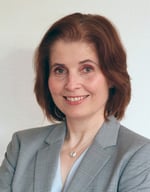
Anna Blom is a professor of medical protein chemistry at Lund University in Sweden, specializing in the complement system since 1998. She received her basic education in biochemistry and molecular biology from Jagiellonian University in Krakow, Poland. Her PhD studies in medical and physiological chemistry focused on bikunin-containing proteins, which are plasma protease inhibitors also involved in the organization of the extracellular matrix.
After defending her PhD thesis in Uppsala in 1997, she moved to Lund University for postdoctoral training with Prof. Dahlbäck, an expert in translational coagulation research. With long-term salary funding from the Swedish Research Council, she established an independent research group dedicated to studying the complement system, a key component of innate immunity. In 2005, she was appointed a full professor at Lund University.
Blom has made significant contributions to understanding the role of the complement system in various pathologies, including infections, rheumatic diseases, cancer, and immune deficiencies. Her research has primarily focused on complement inhibitors, such as C4b-binding protein, factor I, factor H, and CSMD1. More recently, she has explored the role of complement in diabetes and contributed to the discovery of a novel field of intracellular complement.
Anna Blom is a member of the Swedish Royal Academy of Sciences and the president of the International Complement Society.
Dr. Ashley Frazer-Abel
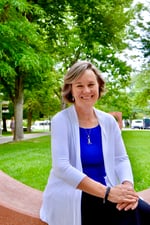 Dr. Ashley Frazer-Abel is the Director and Medical Director of Exsera BioLabs at the University of Colorado, a leading clinical and research laboratory specializing in comprehensive complement and autoimmunity testing. Under her leadership, Exsera BioLabs supports diagnostic evaluation for patients with complement-mediated diseases and provides specialized assay development and testing for clinical research programs and industry partners advancing novel therapeutics. The laboratory maintains CAP and CLIA certification and adheres to FDA GLP and GCP regulations.
A recognized expert in complement testing, Dr. Frazer-Abel serves as Co‑Chair of the International Complement Society (ICS) and the IUIS Committee for the Standardization and Quality Assessment of Complement Measures. She is also the Treasurer of the ICS and will serve as Chair of the 2026 American Complement Society Meeting.
Dr. Frazer-Abel has authored or co‑authored more than four dozen original manuscripts, along with numerous invited reviews and book chapters focused on complement assays, standardization, and clinical interpretation. She is a graduate of Grinnell College and earned her PhD from the University of Colorado. She is certified as a Diplomate of the American Board of Medical Laboratory Immunology.
Prof. Christoph Schmidt
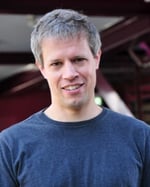 Prof. Christoph Schmidt is a Professor of Experimental Pharmacology at the Institute of Experimental and Clinical Pharmacology, Toxicology and Pharmacology of Natural Products, University of Ulm Medical Center. He studied pharmaceutical sciences at the LMU Munich (Germany) and received his Ph.D. at the University of Edinburgh (United Kingdom; under the guidance of Prof. Barlow), working on the structure and function of the central part of complement factor H. After his studies, Dr. Schmidt moved to the US for his postdoc, where he worked at the Innate Immunity/protein Chemistry laboratory (under the guidance of Prof. Lambris), working on developing a complement inhibitor.
Since 2017 he has been a group leader at the Institute of Pharmacology of Natural Products and Clinical Pharmacology at Ulm University in Germany. After a short stay as a Professor of Biochemical Pharmacy at the Martin-Luther University of Halle-Wittenberg, he was appointed Professor of Experimental Pharmacology at the University of Ulm Medical Center. He and his team use numerous biochemical and biophysical techniques to investigate the complement system to design new therapeutic molecules. His work has made fundamental contributions to the complement field, which includes his extensive work on how the cascade is organized and regulated.
Prof. Mihály Józsi
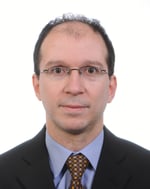 Mihály Józsi is professor of immunology at Eötvös Loránd University, Budapest since 2020. He has been working in the field of complement for over 25 years. He is currently the head of the Department of Immunology at Eötvös Loránd University and director of Bolyai College of the university. He is currently a board member and the secretary of the European Complement Network.
Dr. Józsi studied biology at Eötvös Loránd University and received his Ph.D. in immunology from Eötvös Loránd University in 2002, working on the role of complement receptor type 1 on B cells under the supervision of Prof. Anna Erdei. After his studies, he was a postdoctoral fellow in Jena in the laboratory of Prof. Peter Zipfel, working on the function of factor H, particularly in relation to kidney diseases. He was head of a junior research group between 2006 and 2012, focusing on the role of factor H-related proteins and autoantibodies in kidney diseases, before returning to Budapest in 2012 in the frame of the ‘Momentum’ program of the Hungarian Academy of Sciences.
His main research interest is to understand the roles of factor H family proteins in health and disease, with the aim of translating this knowledge to the benefit of patients.
Inge Van de Walle
 Inge Van de Walle is senior director at argenx and joined the company in 2016. She joined argenx as a scientist immunology and worked on an I/O antibody targeting GARP-TGFb. While at argenx, Inge became the Lead Scientist on the complement C2 program and joined the clinical development teams to bring empasiprubart, ARGX-117, to patients. Additionally, she has the lead in the translational work around anti-C2 to identify new indications.
She holds a Ph.D. in Medical Science from Ghent University and an M.S. in Molecular Biology and Biotechnology from Vrije Universiteit Brussel. Inge has more than 30 publications in high impact journals.
Dr. John Lee
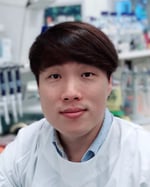 Dr. John Lee is the Ross Maclean Fellow and Bill Guest Mid-Career Research Fellow, leading a team at the Queensland Brain Institute, The University of Queensland, in Brisbane, Australia. He was awarded the ICS Early Career Excellence Award in 2021 in recognition of his contributions to complement research.
Dr. Lee’s work focuses on complement pharmacology and neuroinflammation, particularly in neurodegenerative diseases such as amyotrophic lateral sclerosis, Huntington’s disease, and Parkinson’s disease. He has led translational studies investigating complement-targeted therapies, including PMX205, antisense oligonucleotides targeting C5aR2, and a C5 affibody, in preclinical models.
His recent research explores the role of C3aR in driving neurotoxic astrocyte responses and the involvement of C5aR1 in regulating stress-related neuroimmune pathways. Dr. Lee’s research integrates molecular, cellular, and behavioural approaches to uncover mechanisms of neurodegeneration and advance innovative treatment strategies. He collaborates widely across academia and industry to drive the development of complement-based interventions.
Prof. Simon Clark
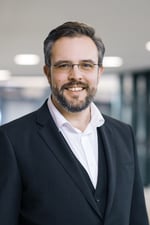 Prof. Clark is a specialist in the complement system who is particularly interested in the role of the extracellular matrix in moderating immunity and inflammation. Since being awarded his D.Phil. in 2007 from the University of Oxford, Prof. Clark has studied the role of complement in ocular disease, such as age-related macular degeneration, and has made a number of significant contributions to the field.
In 2015 he co-founded the Manchester Eye Tissue Repository, which became one of Europes largest repostiories of human eye tissue for reseasrch. And in 2021 co-founded the BioTech company ‘Complement Therapeutics’ to develop complement modifiers for treating inflammatory disease.
Currently, Prof. Clark focuses on ocular immunity and neurodegenerative diseases, running both basic- and translational-research programmes in Europe’s largest ophthalmic research institute at the University of Tübingen, Germany.
Previous Complement Excellence Award Winners
-
2025
Prof. Simon Clark researches how complement dysregulation drives age‑related macular degeneration (AMD).
His work revealed how complement factors interact within the retinal matrix, reshaping our understanding of tissue‑specific complement control. He also built one of Europe’s largest human eye tissue resources and is pioneering retinal organoid models, accelerating the development of next‑generation complement‑targeted therapies for blinding diseases.Read our interview with Prof. Simon Clark
Dr. John Lee work has uncovered how complement pathways influence diseases such as ALS and Parkinson’s, bringing new possibilities for treatment. His research targets receptors like C5aR1 and C3aR and explores innovative strategies including peptide drugs, antisense oligonucleotides, and precision delivery systems that fine-tune complement activity rather than shut it down completely.
-
2024
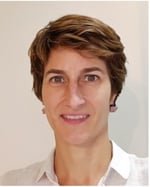 Dr. Elena Goicoechea de Jorge is a leading figure in research on complement-mediated diseases like aHUS and C3G. Her work highlights the role of factor H (FH) and FH-related proteins (FHRs) in alternative pathway overactivation. She is also pioneering the use of AI to analyze genetic data, advancing personalized medicine.
Read our interview with Dr. Goicoechea de Jorge
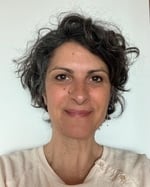 Dr. Sophie Chauvet's research focuses on complement-mediated kidney diseases like C3G and aHUS, where she has identified biomarkers to better predict patient outcomes. With her team, she is pushing boundaries by exploring innovative treatments like bispecific antibodies to regulate complement activity.
 -
2023
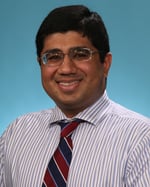 Dr. Hrishikesh S. Kulkarni's research has uncovered how locally produced complement proteins drive lung injury and protection. He is advancing precision approaches to target complement activity directly within the lung, opening new avenues for personalized therapies.
Read our interview with Dr. Hrishikesh S. Kulkarni
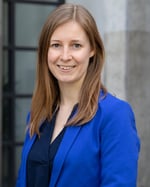 Dr. Christina Lamers has pioneered the use of cyclic peptides and structure‑based design to develop next‑generation C3 inhibitors. She has also expanded the use of phage display and peptide engineering to create high‑affinity tools that deepen our understanding of complement biology.
 -
2022
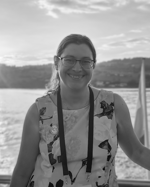 Prof. Lubka T. Roumenina's research has focussed on uncovering how complement activation drives heme‑mediated disorders such as aHUS, sickle‑cell disease, and rhabdomyolysis‑associated kidney injury. Her work has also revealed unexpected intracellular roles for complement proteins, reshaping our understanding of their function in cancer and opening new avenues for targeted, context‑specific therapies and biomarkers.
Read our interview with Prof. Lubka T. Roumenina
Dr. Christoph Schmidt's research has redefined core mechanisms of complement activation. His work on Factor H and engineered regulators like miniFH is advancing next‑generation, enzyme‑like complement therapeutics with greater precision and efficiency, paving the way for more targeted and effective complement‑modulating treatments.