





Identify Complement Activation Induced by AAV therapeutics

AAV Complement Activation Assays
Our AAV Complement Activation Assays
Didn't find what you were looking for?
We offer products customized to your needs. Our custom iLite® reporter-gene assays can be adapted to almost any target. We also offer custom ELISA plates and other products. In addition, you can take advantage of our service offerings and let us do the work for you.
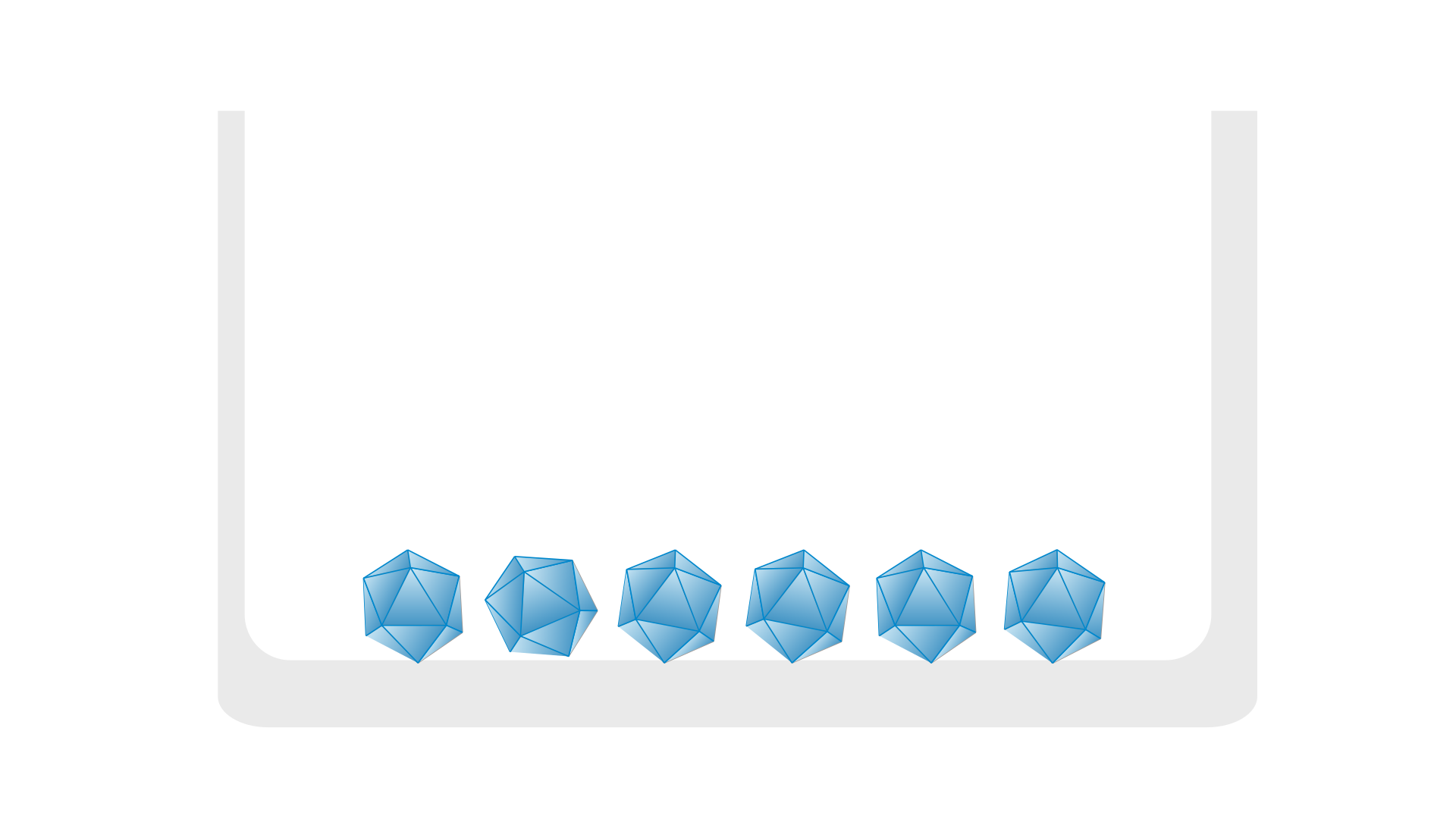
1. ELISA plate coated with immobilized vector
Wild-type vectors or your custom vector can be used.
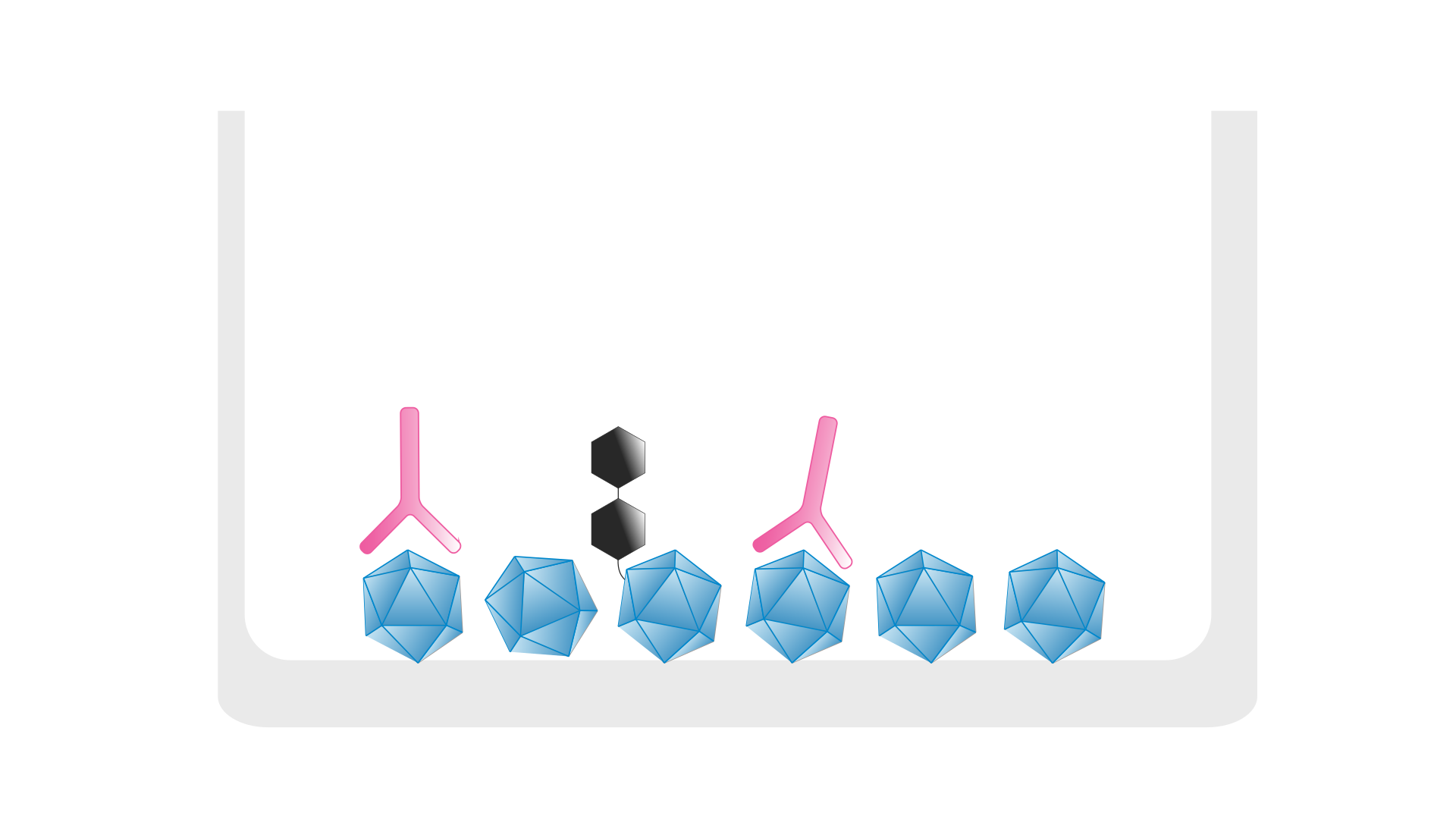
2. Capture of Anti-AAV Binders
Anti-AAV antibodies and potential complement activators (e.g., immunoglobulins/C1q, MBL/ficolins, and C3b) are captured from a human serum sample under complement-suppressing conditions.
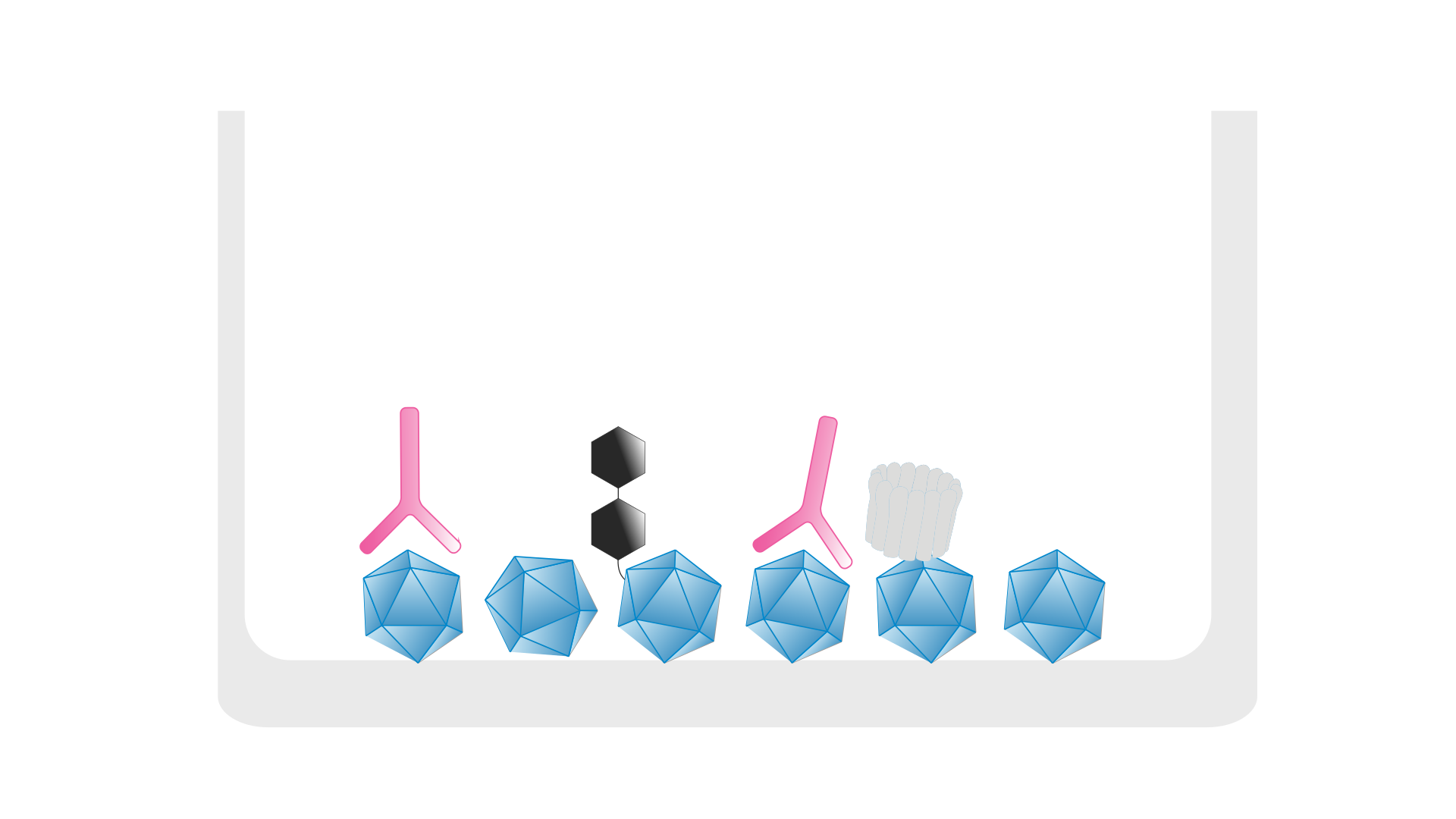
3. Complement activation
Following a washing step, the serum sample is reapplied in a complement-permissive buffer. If complement-activating binders are present, terminal pathway activity results in TCC deposition.

4. Detection
Detection is performed using an anti-TCC antibody, generating a signal proportional to the level of complement activation.
FAQ
What is an AAV Total Antibody (TAb) assay?

Svar Life Science's AAV Total Antibody (TAb) assay is an ELISA-based method designed to detect and quantify total antibodies that bind to AAV capsids. The assay supports assessment of immune responses against both established and custom AAV vectors.
What is the difference between a TAb assay and a NAb AAV assay?
A TAb assay measures all antibodies that bind to an AAV capsid, while a neutralizing antibody (NAb) assay measures antibodies that inhibit AAV transduction. TAb assays provide a broader view of anti-AAV immune responses and can complement NAb testing.
Why is total antibody assessment important in gene therapy?
Understanding anti-AAV antibody responses is important for vector selection, immunogenicity assessment, and evaluation of potential impacts on gene therapy safety and efficacy.
What makes Svar's AAV TAb assay different?
Unlike many standard approaches, Svar Life Science's assay can be adapted to virtually any AAV serotype, hybrid vector, or custom capsid and uses the customer's own AAV preparation rather than requiring a surrogate vector.
Can the assay be customized for novel AAV capsids?
Yes. The assay is designed to support any AAV serotype, engineered capsid, hybrid construct, or chimeric vector, making it suitable for next-generation gene therapy development.
Which applications can benefit from AAV TAb testing?
AAV TAb assays can support immunogenicity assessment, vector development, capsid engineering, candidate selection, and ongoing monitoring of anti-AAV immune responses.
Can Svar develop a custom AAV TAb assay for my vector?
Yes. Svar Life Science offers customized AAV TAb assay solutions tailored to specific vector designs, serotypes, and development programs