





An interview with Svar Complement Excellence Award recipient 2025.
When Dr. John Lee began exploring complement biology nearly two decades ago, few believed it had any role in the brain. But as evidence mounted that complement factors were active within the central nervous system, Dr. Lee found himself at the forefront of a paradigm shift that would redefine how we think about neurodegenerative disease.
This September, that journey was recognized when Dr. Lee received the Svar Complement Excellence Award for Early Career Researchers at the International Complement Workshop in Brisbane, Australia. The award celebrates his pioneering work in complement pharmacology and neuroinflammation and supports his future work to develop therapies that bring hope to patients with ALS, Huntington’s disease, and Parkinson’s disease.
From Neuroscience to Complement Biology
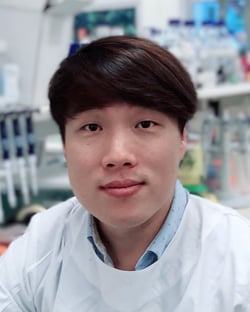 Dr. Lee’s path into complement research was anything but linear. “I’m actually a neuroscientist by training,” he explains, “but I was introduced to the intersection between neuroimmunology when I first started as an honors student at UQ (University of Queensland) back in 2008.”
Mentored by Professors Trent Woodruff and Steve Taylor, Dr. Lee developed a deep interest in the surprising role of complement in the brain. “When I first started, we always thought that the brain and spinal cord were restricted from the blood, from the peripheral immune system because of the blood-brain barrier,” he recalls. Over time, however, it became clear that immune cells can cross the blood-brain barrier and that complement factors are produced within the brain.
This discovery opened new therapeutic possibilities. Dr. Lee has since led translational studies exploring how to target specific complement pathways, from peptide drugs like PMX205 to antisense oligonucleotides targeting C5aR2 and C5 affibody molecules. His recent work examines how C3aR drives neurotoxic responses in astrocytes and how C5aR1 contributes to stress-related neuroimmune damage. Today, his team at the Queensland Brain Institute weaves together molecular, cellular, and behavioral approaches to understand how neurodegeneration unfolds and how complement-targeted therapies might slow or stop it.
The path hasn’t been easy. “When we talked about complement in neurodegeneration years ago, everyone was like, ‘What’s complement?’” Dr. Lee recalls. The research landscape was particularly challenging because he focused on rare diseases. “Working in a rare disease area gives you specialized expertise that others don’t have, but securing funding for the research is a bit scary,” he admits.
As evidence linking complement factors to neurodegenerative diseases grew, so did interest in the field. “If you run omics in brain diseases like Alzheimer’s, Parkinson’s, Huntington’s disease, and ALS (also known as motor neuron disease), complement comes up as a top 10 pathway that’s dysregulated, so it’s becoming a very hot topic in the neuro field,” says Dr. Lee.
That shift has opened new opportunities. After nearly two decades of research, he finally feels the momentum is on his side. “I’ve been waiting for the last 17 years and now I get to ride the wave!”
Bridging Models and Reality
Translating findings into clinical applications is never easy. “Preclinical models are models in a way. Not everything that happens in the model is going to happen in humans,” Dr. Lee notes. His group bridges this gap by combining animal models with patient samples, including blood and postmortem tissues. To do this, they’re leveraging cutting-edge tools like spatial transcriptomics, metabolomics, and nanoparticle-based drug delivery. “We can now get drugs specifically into a specific immune cell in the brain rather than just sending it to the brain in general,” he explains.
Promisingly, one of the drugs Dr. Lee has worked on for 15 years has completed Phase 1B trials in ALS patients, with plans for Phase 2 pending funding. The team is now collaborating with industry partners to secure funding for Phase 2.
Timing is critical, he emphasizes: “You don’t want to turn off complement completely because we do believe that it may play a beneficial role early in the disease.” He compares complement to a double-edged sword—helpful in the early stages but harmful when chronically activated.
Looking ahead, Dr. Lee plans to further integrate AI into his work. “We’ve just started using it and already see great potential for us to use it more to accelerate drug discovery.” Yet he emphasizes that AI alone won’t solve the puzzle. “It’s the collaborative network that’s going to accelerate research. This isn’t a one-person thing; it’s a group effort.”
Advice for Future Researchers
“Believe in the research that you’re doing,” Dr. Lee urges. “There’s always going to be failures throughout your research. Society needs researchers to not give up and keep going with what we’re doing to find treatments or cures for these devastating diseases that we have in the world.” His own journey exemplifies this persistence. “Targeting C5aR1 in ALS has been the idea of myself and my mentor for 20 years. We kept pushing. There’s always going to be failures...don’t give up!"
He also emphasizes the value of community engagement: “When you look at these families and patients and see what they’re going through, it’s devastating. It gives you the motivation to keep going."
“It’s the collaborative network that’s going to accelerate research. This isn’t a one-person thing; it’s a group effort.”
Engaging with patients often brings unexpected insights. “You do find things that you’ve never thought about as a researcher,” says Dr. Lee. “One example is, after talking to a lot of these patients, we realized that pills are not the best drug option because they have difficulty swallowing.” This realization led his team to explore liquid formulations, giving his work deeper meaning while addressing real challenges patients face.
Looking Ahead
After nearly two decades, Dr. Lee sees his work gaining traction. The growing recognition of complement’s role in neurodegeneration has opened new opportunities and validated years of persistence. He believes the field is set to expand significantly over the next 5–10 years, not only in neurodegeneration but across multiple disease areas. His plan is to keep pushing boundaries by collaborating with medicinal chemists to develop targeted compounds and using AI to analyze large patient datasets in search of new therapeutic targets.
Receiving the Svar Complement Excellence Award was a milestone in that journey. “It’s a privilege to be recognized for the work that I’ve done in the complement field,” he says. “It was a happy moment. It’s worth the effort that I put in for the last 17 years!”
Beyond the personal significance, Dr. Lee sees value in the award itself. “It’s great that Svar is doing this to recognize researchers in the field. This kind of recognition motivates us to push the boundaries of research.”
The recognition comes at the opportune time when his Phase 1B clinical trial results are emerging, and new technological tools are becoming available. For Dr. Lee, it’s validation that his focus on rare diseases and complement biology, once considered niche, is now central to advancing neurodegeneration research. “Now is the time to push everything forward and see what we can achieve in complement research for neurodegeneration.”
With momentum building, collaborative networks expanding, and a clear path from bench to bedside, Dr. Lee’s next chapter promises to be his most impactful yet.
Read more about Dr. Lee’s work: