



AAV Gene Therapy
Rewriting the Story of Genetic Disease
An Introduction to AAV Gene Therapy
The idea behind gene therapy is simple yet revolutionary: introduce genetic material into cells to treat disease – whether by adding a functional copy of a missing gene, silencing a harmful one, or editing the genome directly. However, the path to success has been far from smooth. Early clinical setbacks and unclear regulations initially forced the pharmaceutical industry to pause development.
Today, gene therapy is making a triumphant return. Backed by decades of rapid breakthroughs in molecular biology, scientists have pinpointed the exact genetic mutations driving numerous disorders. With a wave of recent FDA approvals, gene therapy is no longer just a theoretical promise – it is actively redefining the future of medicine.
An estimated 7,000 rare diseases have been identified worldwide, the majority of which are caused by mutations in a single gene (monogenic disease). These conditions range in severity from mild symptoms to life threatening disorders.
Gene therapy holds great promise as an effective treatment for these diseases. Over the coming decades, gene therapy for a wide range of disorders, such as inherited diseases, cancer, and viral infections, may become commonplace.
How does gene therapy successfully deliver new genetic material into our cells? What challenges and risks accompany these cutting edge treatments, and what does it take to develop gene therapies that are both safe and effective?
Here, we will focus on AAV-based approaches, currently the most widely used viral vector for in vivo gene therapy.
What are AAVs?
Adeno-associated viruses (AAVs) are small, non-enveloped DNA viruses belonging to the Parvoviridae family. They were first discovered in the 1960s as contaminants in adenovirus preparations. Unlike most viruses, AAVs are classified as dependoviruses: they cannot replicate productively without co-infection by a helper virus such as adenovirus or herpesvirus. In the absence of a helper, AAVs establish a latent infection. Most people have been exposed to AAVs at some point – for some serotypes, over half the population carries antibodies against them – yet AAVs have not been linked to any known human disease.
The AAV genome is small (around 4.7 kilobases of single-stranded DNA) and encodes only the genes needed for replication and capsid assembly, flanked by inverted terminal repeats (ITRs). AAVs are also physically stable, retaining activity across a wide range of pH and temperature conditions.
These properties – a strong safety record, the ability to reach a wide range of tissues, and a capsid that can be loaded with custom genetic cargo – make AAVs well-suited as delivery vehicles for gene therapy.
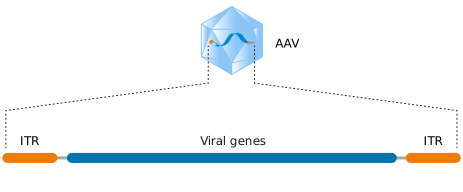
Structure of AAVs. AAVs have small genomes of only about 4.7 kilobases of single-stranded DNA, packaged inside a small icosahedral capsid. The viral genome contains two main genes: rep (responsible for replication) and cap (encoding three capsid structural proteins). These genes are flanked by inverted terminal repeats (ITRs), which form hairpin structures essential for viral genome replication and packaging.
How does AAV gene therapy work?
In AAV gene therapy, a recombinant AAV (rAAV) vector is engineered to carry a therapeutic gene in place of the virus’s own coding sequences. Once delivered to target cells, the vector releases its cargo into the nucleus, where the cell’s own machinery transcribes and translates the therapeutic protein.
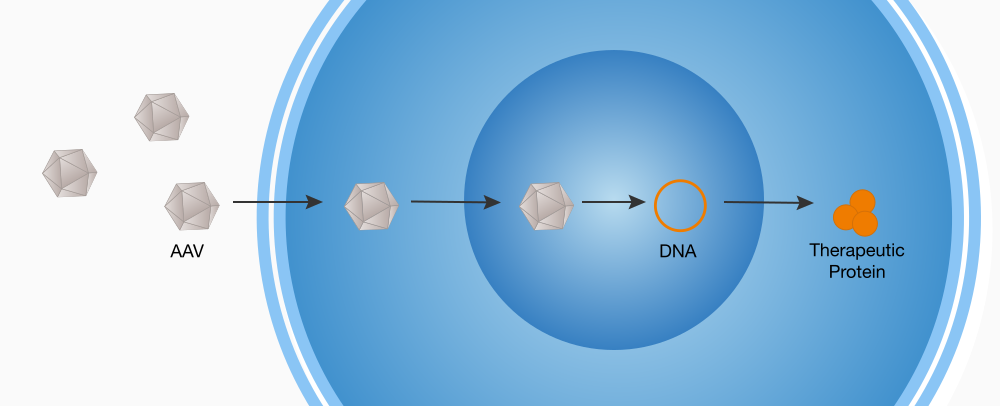
Principle of AAV-mediated gene therapy. Recombinant AAV vectors carrying transgenes cross the cell membrane and deliver their cargo into the nucleus of the cell. Here, the transgenes persist in a circular episomal state. Following the transcription of the episome DNA, the therapeutic protein is expressed in the cytoplasm of the cell.
In gene therapy, rAAV vectors, which lack viral DNA, are used. They have been engineered to cross the cell membrane and deliver their DNA cargo into the cell nucleus. The transgenes are flanked by inverted terminal repeats (ITRs) that allow them to form episomes in the nucleus of the cells. Since the episomes do not integrate into the cell genome and have no way of self-replicating, they will be diluted to a point where they are eventually lost over multiple rounds of cell replication.
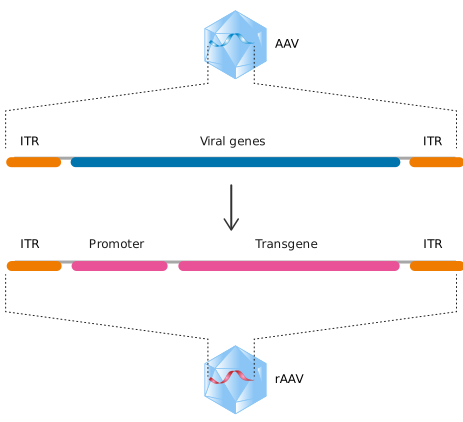
Genome structure of AAV and rAAVs. In recombinant AAV vectors, viral genes that are required for viral genome replication and packaging have been replaced by transgenes. This allows for the expression of the therapeutic protein without the ability of the virus to spread and infect other cells.

Key advantages of AAV gene therapy
AAV vectors have become the most popular viral gene delivery system in clinical trials for several compelling reasons:
-
Non-pathogenic
First and foremost, AAVs are non-pathogenic – they have never been associated with any human disease, which provides a strong safety foundation compared to other viral vectors.
-
Long-lasting effect
AAV vectors also offer long-lasting transgene expression. Because the delivered DNA persists as episomal DNA in the nucleus of target cells without integrating into the host genome, a single treatment has the potential to provide therapeutic benefit for years or even a lifetime in non-dividing cells. This makes AAV gene therapy particularly attractive as a one-time curative intervention, rather than a lifelong regimen of repeat dosing.
-
Distinct target tissues
The availability of multiple serotypes with distinct tissue tropisms allows researchers to tailor vectors to specific therapeutic targets – from the eye and brain to the liver, muscle, and heart. The AAV capsid can also be engineered to improve specificity, enhance transduction efficiency, and reduce immune recognition.
-
Relatively mild immune responses
Additionally, AAV vectors elicit relatively mild immune responses compared to other viral vectors such as adenoviruses, which have historically been associated with severe inflammatory reactions. AAV vectors can also transduce both dividing and non-dividing cells, giving them broad applicability across different tissue types and disease contexts.
Challenges and limitations of AAV gene therapy
Despite its many advantages, AAV gene therapy faces several important challenges that must be addressed for broader clinical adoption:
-
Limited cargo capacity
The AAV capsid can accommodate approximately 4.5–4.7 kb of total DNA, including ITRs and regulatory elements, making size a limiting factor for large therapeutic genes. This has driven the development of strategies such as dual-vector systems and truncated gene constructs, but these approaches add complexity.
-
Pre-existing immunity
Because wild-type AAVs circulate widely in the human population, many people carry antibodies against common AAV serotypes. These pre-existing antibodies can block vector transduction and exclude a significant portion of patients from treatment. The seroprevalence varies by serotype and geographic region, but can be as high as 70–90% for certain serotypes.
-
Dose-dependent toxicity
High systemic doses of AAV vectors, often required for treating systemic diseases, have been associated with serious adverse events including hepatotoxicity and thrombotic microangiopathy (TMA).
-
Redosing limitations
Because patients develop robust anti-AAV antibody responses after a first treatment, re-administration is currently not feasible. For conditions requiring repeat dosing, this represents a major barrier. Strategies under investigation include the use of immunosuppressive regimens and IgG-cleaving enzymes to create a window for retreatment.
-
Manufacturing complexity and cost
Producing clinical-grade AAV vectors at scale remains technically demanding and expensive. The most common production method involves transient transfection of mammalian cells, which is difficult to scale up for widespread use. As gene therapies expand from ultra-rare diseases to more common conditions, manufacturing scalability will become a critical bottleneck.
Since the episomes do not integrate into the cell genome and have no way of self-replicating, they will be diluted to a point where they are eventually lost over multiple rounds of cell replication
AAV serotypes and their clinical applications
One of the most important features of AAVs is the existence of multiple serotypes, each with distinct preferences for specific cell types and tissues – a property known as tissue tropism. At least 13 well-characterized serotypes (AAV1–13) have been identified, but these represent only a fraction of the hundreds of AAV variants isolated from primates, bats, snakes, and other animals.
Tropism is largely determined by the specific interactions between serotype-specific structures on the AAV capsid and cellular receptors. For example, AAV2 and AAV3 bind heparan sulfate proteoglycan, while AAV1, AAV4, and AAV5 use sialic acid, and AAV9 utilizes galactose as a primary receptor. Following initial binding, secondary protein receptors facilitate virus internalization into the target cell.
The following are some of the most clinically relevant serotypes:
- AAV1 shows high tropism for skeletal muscle and was the basis for the first approved AAV gene therapy drug (Glybera, EMA 2012; later commercially withdrawn in 2017).
- AAV2 is the most extensively studied serotype, with broad tropism for the retina, liver, CNS, and muscle. It is used in Luxturna, the first FDA-approved in vivo viral gene therapy for an inherited disease (2017).
- AAV5 is the most genetically divergent serotype and is used in Hemgenix and Roctavian for hemophilia B and A, respectively.
- AAV6 has tropism for a variety of tissues, including airway epithelia, liver, skeletal muscle, and heart.
- AAV8 is known for its exceptionally strong liver tropism and efficient transduction of hepatocytes.
- AAV9 has the unique ability to cross the blood-brain barrier and is used in Zolgensma for spinal muscular atrophy; it also shows strong tropism for cardiac and skeletal muscle.
Choosing the right serotype is critical for gene therapy design, as it determines which tissues will be transduced, how efficiently the transgene is delivered, and what immune responses the patient may experience. Importantly, tropism observed in animal models does not always translate directly to humans, so tissue-specific promoters are often incorporated into vectors to further refine expression patterns.
AAV vector engineering
While natural AAV serotypes have proven effective, they have inherent limitations such as insufficient tissue specificity and susceptibility to anti-AAV antibodies (TAbs). To overcome these, researchers are engineering novel AAV variants that go far beyond the natural serotypes. The main capsid engineering strategies include directed evolution, where large libraries of random capsid mutants are screened for desired properties; rational design, where targeted modifications are made based on structural knowledge of the capsid; and computational approaches such as ancestral sequence reconstruction, which infers evolutionary predecessors of modern AAVs to create thermally stable scaffolds for further optimization.
More recently, artificial intelligence and machine learning have emerged as powerful tools for AAV engineering. By training models on large sequencing datasets, researchers can predict which capsid sequences will be viable, how they will perform in specific tissues, and whether they can evade immune detection—dramatically accelerating the design process. Beyond the capsid itself, the DNA payload can also be engineered: self-complementary AAV (scAAV) vectors enable faster gene expression, and the use of tissue-specific promoters helps restrict therapeutic gene activity to the intended target organ. Together, these engineering approaches are expanding the AAV toolkit well beyond what nature provides, with the goal of creating vectors that are safer, more specific, and more effective.
Approved AAV-based gene therapies
Eight recombinant AAV-based therapies have received regulatory approval to date, spanning a range of disease areas.
- Luxturna (voretigene neparvovec, FDA 2017) delivers a functional copy of the RPE65 gene via an AAV2 vector to retinal pigment epithelium cells, treating Leber congenital amaurosis type 2, an inherited retinal dystrophy caused by biallelic RPE65 mutations. Phase III trial data showed greater than 100-fold improvements in light sensitivity within 30 days, sustained over subsequent years of follow-up.
- Zolgensma (onasemnogene abeparvovec, FDA 2019) uses an AAV9 vector to deliver the SMN1 gene for spinal muscular atrophy (SMA). Administered intravenously, the vector crosses the blood-brain barrier to transduce spinal motor neurons. It is approved for patients under two years of age with SMA.
- Hemgenix (etranacogene dezaparvovec, FDA 2022) and Roctavian (valoctocogene roxaparvovec, FDA 2023) treat hemophilia B and hemophilia A, respectively. Both use AAV5 vectors to deliver the relevant clotting factor gene (Factor IX or Factor VIII) to hepatocytes via intravenous infusion.
- Elevidys (delandistrogene moxeparvovec, FDA 2023) is the first approved gene therapy for Duchenne muscular dystrophy (DMD). It delivers an abbreviated micro-dystrophin gene construct via systemic AAV administration to muscle tissue.
- Beqvez (fidanacogene elaparvovec, FDA 2024) uses an AAVRh74var capsid to deliver a high-activity Factor IX variant (FIX-Padua) to hepatocytes for the treatment of moderate to severe hemophilia B. It is administered as a single intravenous infusion to patients who are negative for neutralizing antibodies to the AAVRh74var capsid.
- Kebilidi (eladocagene exuparvovec, FDA 2024) is the first FDA-approved gene therapy delivered directly to the brain. It uses an AAV2 vector to deliver a functional copy of the DDC gene via intraputaminal infusion to treat aromatic L-amino acid decarboxylase (AADC) deficiency.
- Otarmeni (lunsotogene parvec-cwha, FDA 2026) is the first dual-AAV vector-based gene therapy, approved for hearing loss. Administered via intracochlear infusion, it delivers a functional copy of the OTOF gene to inner hair cells to restore synaptic transmission to the auditory nerve.
Together, these approvals cover ocular, neurological, hematological, otological, and neuromuscular indications and demonstrate the clinical versatility of the AAV platform.
How Svar can help
We provide specialized solutions for gene therapy development, including custom potency assays, AAV safety testing, and mechanism-of-action (MoA)-reflective bioassays. Our expertise helps you meet regulatory requirements and accelerate innovation.
From custom potency assays and MoA-reflective bioassays to AAV-specific services for NAbs, total antibody (TAbs), and complement activation, we provide tailored solutions backed by GMP-compliant CRO support.