






An interview with Svar Complement Excellence Award 2026 recipient Dr. Wioleta Zelek, Group Leader at the UK Dementia Research Institute (UK-DRI) at Cardiff University, UK.
Dr. Wioleta Zelek did not choose the easy way into academia. Her journey required a leap of faith and leaving an established career in the biotech industry, together with the stability and structure that comes with it. “I really enjoyed my time in biotech. I absolutely loved it. But I find that academia gives you the freedom to ask bold questions. If you have that curiosity and that hunger, you need to feed it and to be constantly challenged.”
Today, Dr. Zelek leads her research group and knows she’s where she belongs. This September, she received the Svar Complement Excellence Award 2026, recognizing her work on how the complement system impacts neuroinflammatory and neurodegenerative conditions, such as Alzheimer's disease. The award will support her work towards the development of effective treatments.
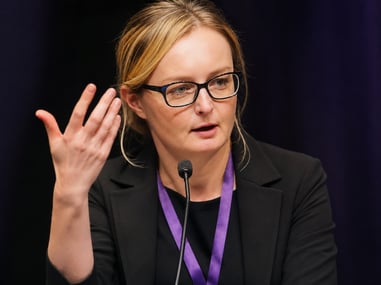
Dr. Zelek is a Group Leader at the UK Dementia Research Institute (UK-DRI) at Cardiff University supported by the prestigious UKRI Future Leaders Fellowship Award. Her research focuses on understanding how the complement system contributes to brain inflammation and neurodegenerative diseases, such as Alzheimer's disease. The complement system has a protective role in the brain, but its action becomes harmful when dysregulated. Our understanding of complement regulation in the brain is still very limited. Deciphering it is key to the development of new treatments.
“Knowing the mechanisms that drive complement dysregulation will enable us to identify the right targets and develop effective complement therapeutics for brain diseases” she explained. But the challenge does not stop there. “The biggest challenge we are currently facing for treatments of brain diseases is the blood brain barrier. The barrier protects us from harmful molecules getting into the brain but also prevents access of drugs to the site of injury for the effective treatment of diseases.”
The unique role and opportunities with complement in the brain
Dr. Zelek's interest in complement and neurodegenerative diseases came naturally from her earlier work on complement-mediated autoimmune diseases, including myasthenia gravis and multiple sclerosis.
As evidence for a role of complement in neurodegeneration grew, the obvious question became whether these tools and therapeutic approaches could be applied to protect the brain and develop new treatments for dementia. Dr. Zelek went on to show that the terminal inflammatory effector of the complement cascade membrane attack complex (MAC) contributes to synapse loss in Alzheimer’s disease models, establishing the terminal pathway as a potential therapeutic target.
“Whenever I approach a scientific question, I try to foresee what impact it could have on patients. Whatever I do, I ask myself: ‘who is this going to help, how is this going to improve someone's life?’”
Her background in chemistry and PhD in immunology had already exposed her to diseases associated with the complement dysregulation. The scientific training combined with the experience in the biotech industry helped her to recognize the therapeutic potential of the complement system – a highly druggable pathway with multiple opportunities for intervention.
Why complement matters for Alzheimer’s disease
Dementia has become a global pandemic, with more than 55 million people living with dementia globally. Despite major advances, effective disease-modifying treatments remain limited, creating an urgent need for new therapeutic approaches that can protect the brain and slow disease progression. For Dr. Zelek, this enormous challenge also represented an opportunity to apply her expertise in complement therapeutics to an area of major unmet need.
"I saw an opportunity. I already had the antibodies, and I thought we could engineer them to cross the blood-brain barrier. It was a high risk, ambitious project at the time, and initially it proved difficult to secure funding."
The funding eventually appeared from a rather unexpected source: Race Against Dementia, a charity founded by Formula One legend Sir Jackie Stewart after his wife was diagnosed with the condition. Inspired by the speed, innovation and teamwork of Formula One, the charity aims to accelerate dementia research by supporting early career researchers to pursue ambitious, high-risk ideas.
Dr. Zelek's research on neurodegeneration stemmed from published evidence that identified complement proteins as main drivers of synapse loss. Synapses are fundamental to brain function, learning and memory, and their loss is closely associated with cognitive decline in Alzheimer’s disease. Complement proteins C1q and C3 have been observed to accumulate at synapses, tagging them for removal by microglial cells.
Beyond synapse loss, converging evidence build a strong rationale for targeting complement as a therapeutic strategy in Alzheimer’s disease: complement-related genes as risk loci; the presence of altered complement proteins in patients; patterns of complement activation and deposition in affected regions; and evidence from animal models of reduced disease features, including synapse loss, through complement manipulation.
The diversity of complement proteins, their multiple pathways, and their enzymatic steps hint at the incredible array of potential druggable targets the pathway offers.
Assays and therapeutics toward effective treatments
With funding secured, Dr. Zelek built a research programme spanning the journey from understanding complement dysregulation to developing new treatments. Her team has developed around 25 complement immunoassays, alongside functional assays, and is investigating complement biomarkers in plasma, cerebrospinal fluid (CSF) and extracellular vesicles to identify which pathways are altered in disease and which patients might benefit from complement therapeutics.
In parallel, the lab is developing a therapeutic toolbox targeting different parts of the complement cascade, with a particular focus on MAC. As mentioned above, the major challenge is getting these therapies into the brain. Therefore, the team is engineering antibodies that use receptor-mediated transport to cross the blood–brain barrier and deliver complement inhibitors where they are needed.
The group is also exploring combination therapies for Alzheimer’s disease — including whether complement inhibition can be combined with amyloid-clearing antibodies to maintain their therapeutic benefit while reducing downstream inflammation and tissue damage.
Future projects and helping the next generation of complementologists
Dr. Zelek’s enthusiasm for her research shines through when she projects future prospects in the field. The Complement Excellence Award will support her ongoing work in developing novel complement therapeutics and biomarkers, as well as expanding the lab’s induced pluripotent stem cells (iPSC)-based models to better understand complement biology in human brain cells. The Award will provide the freedom to test ideas and generate preliminary data that could underpin future large-scale grant applications.
Supporting and developing the next generation of scientific talent is incredibly important to Dr. Zelek. Importantly, the Award will catalyse CAKE; the Complement Academic Knowledge Exchange – a new training programme that will bring early-career researchers to her UK DRI lab in Cardiff for hands-on training in specialist complement techniques. The aim is to create a ripple effect, with participants taking this expertise back to their own labs and sharing it with others. Dr. Zelek hopes that colleagues across the complement community will join the initiative, helping to build a supportive, collaborative network for the next generation of complement scientists.
Advice to the next generation
"Be brave, take risks and follow the ideas you believe in. Don’t wait for opportunities – create them, and surround yourself with people who challenge you, support you and help you grow"
Talking from her own experience, Dr. Zelek urges future generations of researchers to follow their passions and not be afraid to change directions. Her own transition from industry back to academia taught her that taking risks can open unexpected opportunities. She is equally clear that there are no shortcuts: hard work, persistence and long hours do pay off. But success rarely happens alone – asking for help, finding good mentors and surrounding yourself with people who challenge and support you are just as important.