






Article originally published by Select Science (selectscience.net)
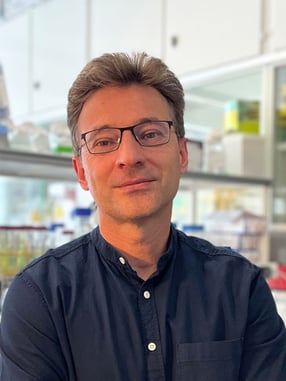
Előd Körtvély, principal scientist at Pharma Research and Early Development (pRED), Roche Innovation Center, Basel, outlines the innovative work using functional assays to address debilitating dry age-related macular degeneration and shares how the Ophthalmology team strives to develop novel therapeutic approaches for major eye diseases.
 Advanced age is the most important risk factor for many sight-threatening conditions and there is increased prevalence of these eye diseases in our aging population.
The leading cause of blindness in the elderly is age-related macular degeneration (AMD) – a chronic, multifactorial disease with modifiable (environmental factors) and non-modifiable (genetic susceptibility) risk factors.
AMD manifests in two forms: wet and dry. While there are existing therapeutic options for wet (neovascular) AMD, to date, there is no approved treatment for geographic atrophy (GA), a debilitating late stage of the dry form. Unfortunately, over 85% of affected individuals develop the dry form, which presents a large unmet therapeutic need in this patient group.
How has the drug discovery process within the complement field evolved?
The completion of the Human Genome Project in 2003 opened the door for the identification of genetic variants that are associated with increased risk of AMD. Many of these genetic polymorphisms reside in genes coding for proteins of the complement system. This arm of the innate immune system consists of several distinct proteins that form an intricate network involved in the recognition and elimination of pathogens and damaged self-structures.
Before the discovery that complement is a major driver of AMD pathogenesis, the complement system was sometimes referred to as a leftover and obsolete part from human evolution. The recognition that an imbalance in complement regulation may turn this defense mechanism into a powerful destructive instrument triggered an unprecedented surge in developing drugs inhibiting this proteolytic cascade.
What are the key challenges in this field?
Finding the Achilles’ heel of such a complex system poses particular challenges. Some complement proteins are present in the body in very high concentrations, and neutralizing these targets requires high doses administered frequently.
Other complement proteins circulate in the blood in low concentration, but their high turnover rate makes them suboptimal drug targets.
Finally, many of these proteins are present in large excess, and even a few percent of free protein can maintain a fully functional pathway.
How do you use and benefit from functional assays in your work?
A large variety of biochemical and cell-based assays are needed to assess the potency of candidate complement inhibitors. Biochemical assays using a limited number of purified proteins have several advantages. These assays can be easily standardized, are highly reproducible, and provide precise data about the potency of an inhibitor.
We have recently established a new analytical platform for comprehensive interrogation of complement activation and inhibition, and the results from this work were presented at the 18th European Meeting on Complement in Human Disease (EMCHD) in Bern. On the other hand, a blood serum sample contains several thousand different proteins, thereby it more accurately reflects the in vivo conditions.
However, serum samples from different donors often generate vastly differing results in various assays due to individual differences (for example, sex, age, genetic makeup, etc.).
The Wieslab® Complement System Screen kit from Svar Life Science was originally designed to detect complement deficiencies. Our team employs this ELISA-based assay to measure the functional activity of complement inhibitors added to various human serum samples.
What are you most excited about for the future of complement-targeting drugs?
I am especially excited about the increasing awareness of the role complement plays in various pathological conditions, ranging from very rare blood disorders to common conditions such as AMD or Alzheimer’s disease.
The number of complement-targeting approaches has increased steeply in the last couple of years, which holds promise for future therapies that could benefit millions of patients.
About Svar Life Science
Svar is a Swedish life science company that invents, develops and applies the best assay technology for drug development and clinical diagnostics with the goal to deliver new solutions tailored to customer requirements.
Svar Life Science has extensive experience in developing iLite reporter-gene assays and can create cell-based assays for almost any target. Using these assays, we help pharmaceutical companies create safe and effective treatments and help advance drug discovery.