




iLite® TLR4 Assay Ready Cells
BM4025
The iLite® TLR4 assay enables detection of TLR4-mediated NF-κB signaling. Ideal for evaluating innate immune activation and screening TLR4 agonists or antagonists.
- High sensitivity and large dynamic range
- "Assay-ready" format for rapid and convenient use
- Reproducible and biologically relevant results
- Reduced assay variability and higher reproducibility compared to cells in culture
- Normalization of cell counts and serum matrix effects using a second reporter gene
Product Overview
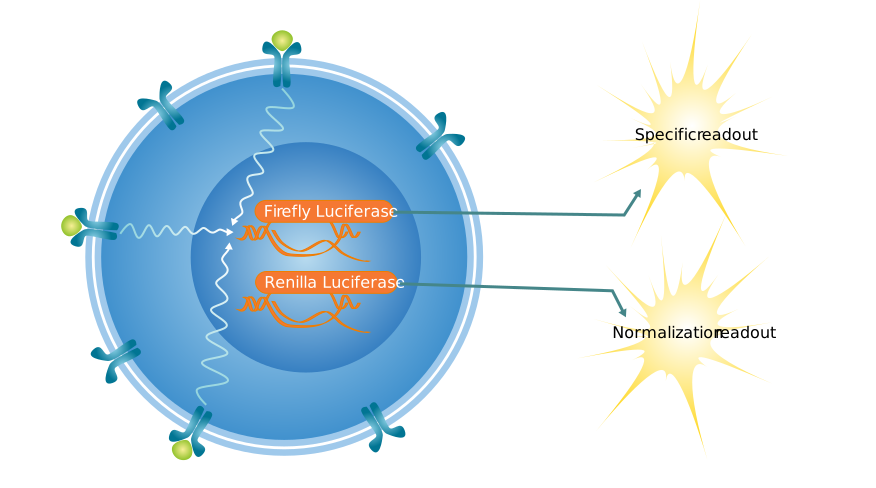
iLite® TLR4 Assay Ready Cells can be used to determine the activity of both TLR4 agonist and antagonist drugs, as well as any neutralizing antibodies against such drugs – all using the same assay. It is based on a human erythroleukemic cell line that has been genetically engineered and optimized for the quantification of LPS and for the detection of TLR4 inhibiting activity by specific and proportional expression of Firefly Luciferase. A second Renilla Luciferase reporter gene can be used for normalization of cell counts and to compensate for serum matrix effects.
Toll-like receptors (TLRs) are a family of pattern recognition receptors that induce pro-inflammatory responses to invading pathogens, such as bacteria, fungi, viruses, and parasites. TLR4, the most extensively studied TLR, is activated by lipopolysaccharide (LPS) – a common component of Gram-negative bacteria. In addition to LPS, a number of damage-associated molecular patterns (DAMPs), have also been shown to be capable of activating TLR4. Upon activation of TLR4, downstream signaling pathways are activated leading to the production of inflammatory cytokines and chemokines.
FOR RESEARCH USE ONLY
How it works

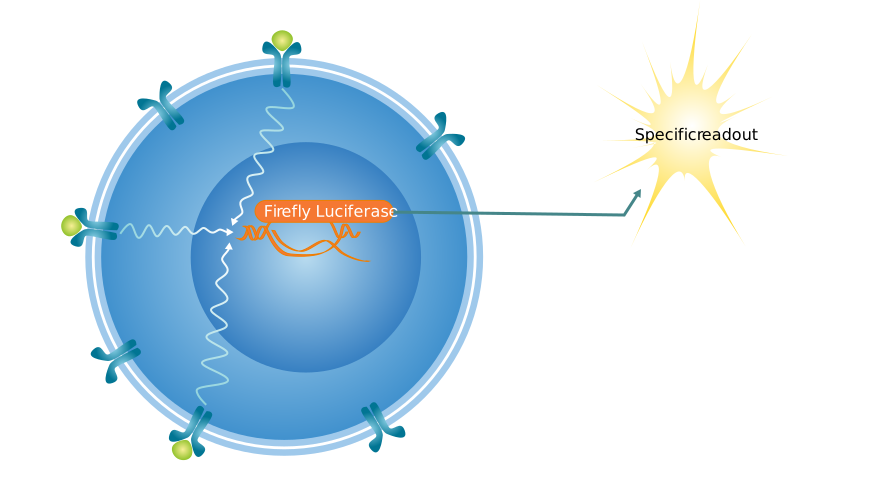
The function of iLite assays
iLite cells have receptors on the cell surface that can bind to the marker under study.


What's in the box?
>250 µL of Assay Ready Cells suspended in cryoprotective medium.
Specifications
| Product code | BM4025 |
| Assay target | TLR4 LPS |
| Technology | Cell-based reporter gene assay |
| Detection system | Luminescence |
| Regulatory status | Research Use Only |
Documents

Downloads

Navigating the Complexities of Cell-based Assays in GMP QC Testing: The Journey to Robust Assays
Read post
The Value of Assay-Ready Cells in Providing Biologically Relevant Data for Robust Therapeutic Develo...
Read post
How Biosimilars Are Expanding Options for Patient Care
Read post
Biosimilar Development: Experts Discuss Analytical Characterization Toolkits for Antibody Therapeuti...
Read post
The Future of Drug Development for Complex Pathologies: Versatile Cell-based Assays and Customizable...
Read post
Webinar - Advancements in GMP QC Testing: A Comprehensive Guide to Cell-Based Assays
Read post